
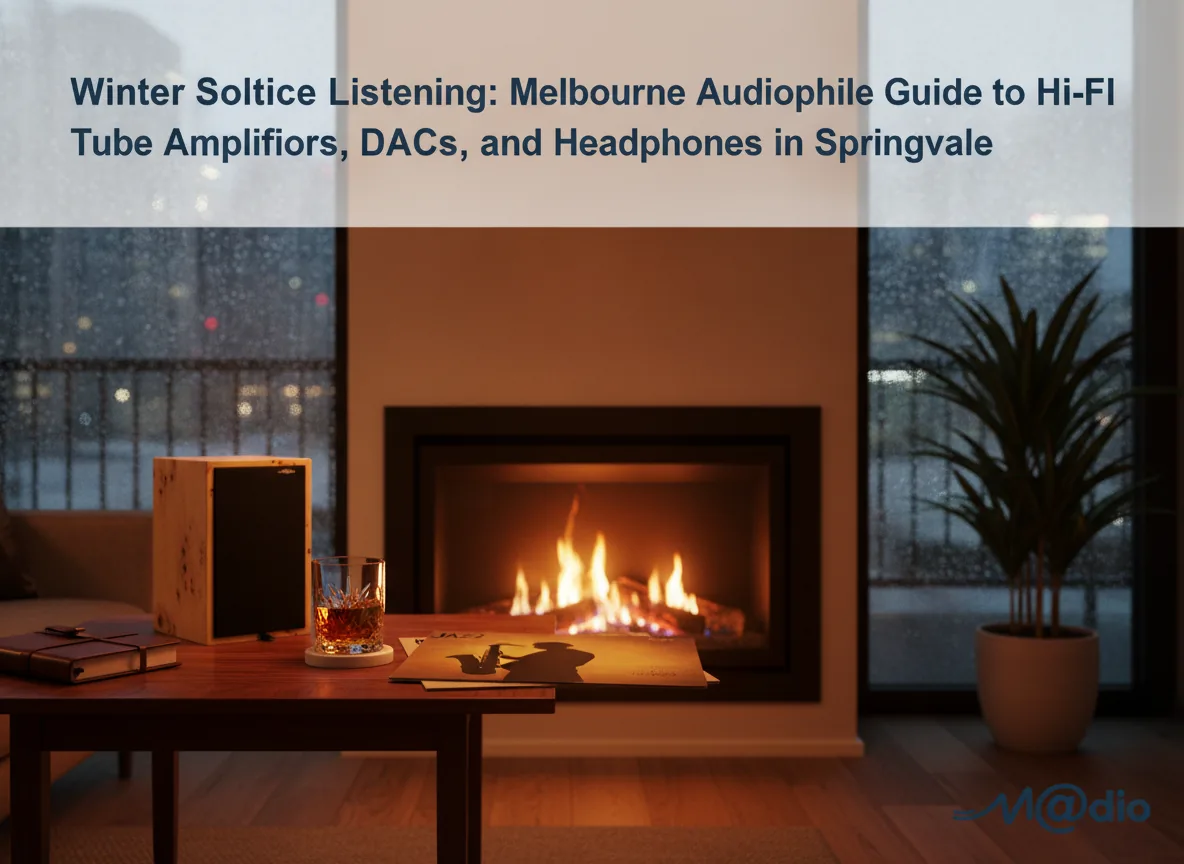
As the Winter Solstice approaches on June 21, Melbourne braces for its darkest and coldest days. The relentless freezing rain and biting winds naturally drive music lovers indoors, creating the perfect atmosphere to cocoon in a comfortable chair for extended, uninterrupted listening sessions. While modern solid-state digital systems offer clinical perfection, discovering true acoustic refuge from the winter chill requires the rich, organic magic of a high-end tube amplifier paired with a pristine DAC and premium dynamic headphones.
The Organic Magic of Harmonic Distortion
Solid-state amplifiers are engineered to measure flawlessly on an oscilloscope, but they can occasionally render lossless acoustic, jazz, or classical tracks feeling somewhat sterile and lifeless. Tube amplifiers, by contrast, naturally introduce even-order harmonic distortion. The human ear perceives this specific type of distortion as immensely musical, rich, and “warm.” This analog glow wraps around the listener, expanding the soundstage to create a holographic, intimately live performance right in your living room.
The Subjective Art of Tube Rolling
The profound allure of analog audio lies in its customizability, primarily through “tube rolling”—the practice of swapping vacuum tubes to slightly alter an amplifier’s sonic profile. This process perfectly illustrates why high-fidelity audio is intensely subjective. A specific tube combination that one listener praises on an audiophile forum as delivering “lush, enveloping warmth” might be dismissed by another as “muddy” or suffering from a severe “loss of micro-detail.” Your unique ear anatomy and personal acoustic preferences dictate this perception entirely.
Impedance Synergy: Why Specs Matter
To fully unlock this analog warmth without ruining the track, strict electrical synergy is non-negotiable. Output Transformer Less (OTL) tube amplifiers inherently possess a high output impedance. If you mistakenly pair them with highly sensitive, low-impedance headphones based on online hype, you will destroy the electrical damping factor. This results in a sluggish, bloated bass response that completely smears the music. OTL amplifiers demand high-impedance dynamic headphones to truly sing.
Tube Amp & Headphone Synergy Calculator
Because these sonic flavors are so deeply personal, relying on specification sheets or forum consensus is fundamentally flawed. Personal taste cannot be quantified by another reviewer’s ears. Engaging with dedicated audio communities to cross-reference peer experiences remains the only definitive way to discover the sound signature that perfectly resonates with your individual hearing profile.
Frequently Asked Questions
What makes tube amplifiers sound “warm”?
Tube amplifiers utilize glass vacuum tubes to amplify the audio signal, which naturally introduces even-order harmonic distortion. The human ear processes these even harmonics as a richer, thicker, and “warmer” sound, contrasting sharply with the harsh odd-order distortion found in overdriven solid-state equipment.
Why shouldn’t I trust online reviews for tube amplifiers?
Audio is deeply subjective. A reviewer’s perception of “warmth” or “detail” is dictated by their unique hearing profile, their specific headphones, and their musical preferences. What sounds “lush” to them might sound lacking in detail to you, making engaging with audiophile communities to cross-reference experiences essential.
Why do OTL tube amps need high-impedance headphones?
OTL (Output Transformer Less) tube amplifiers naturally have a high output impedance. To maintain proper electrical control over the headphone driver (known as the damping factor) and prevent bloated, loose bass, they must be paired with headphones featuring an even higher impedance, typically 150 Ohms or above.
Listen to the shape of a performance, not just its loudest moment
A quiet evening is an opportunity to follow how a recording develops. Choose a familiar performance with a gentle opening, a fuller passage and a clearly fading ending. Keep the playback path unchanged and begin with the louder passage at a comfortable level before returning to the start.
- During the opening, note which instrument begins the phrase and whether you can follow it without reaching for the volume control.
- At the fuller passage, describe the relationship between the leading instrument and the accompaniment. Do not rank a presentation simply because its loudest moment attracts attention.
- At the ending, listen to the musical decay and then pause. Record any background sound separately from the performance.
- Replay the sequence once without changing the level. If the opening is difficult to follow, note that condition rather than automatically blaming the amplifier or turning up each quiet section.
Dynamic-range compression changes the relationship between quieter and louder parts; the official dynamics-processing guide explains that function. It is a different question from the data format used to deliver a recording.
Performance-shape FAQ
Does a wider loud-to-quiet contrast prove better equipment?
No. The recording and any active processing must be considered before assigning the impression to hardware.
Should I add processing for this exercise?
Keep the first pass unchanged. If you later explore an available processing control, save the baseline and label the result separately. The purpose is to learn the recording, not to create a universal recipe for winter listening or tube amplification.