
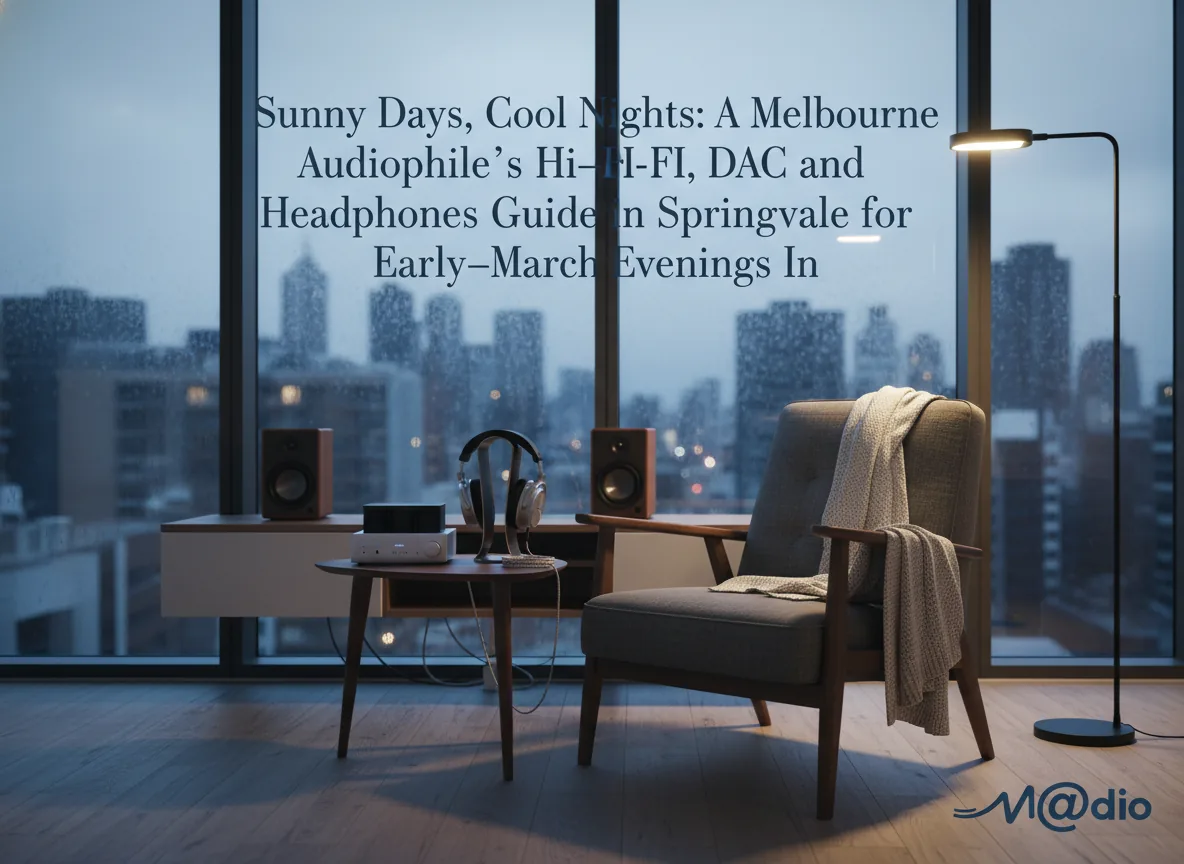
Sunny Days, Cool Nights: A Melbourne Audiophile’s Hi‑Fi, DAC and Headphones Guide for Early‑March Evenings In
Early March in Melbourne typically brings daytime highs around 23–24 °C and cool nights near 14–15 °C, with a mix of sunshine and a few showers—classic shoulder‑season weather that invites relaxed evenings indoors.
SHOULDER SEASON • EVENINGS IN
Why Early‑March Weather Is Ideal for Refining a Listening Corner
March is widely regarded as one of the best times to enjoy Melbourne, with comfortable days and crisp evenings that naturally encourage people to linger at home after work.
Instead of heading straight back out, many Melburnians find themselves drawn to the sofa, a favourite chair or a small nook where music or films become the main event.
It is the perfect moment to ask whether your current setup still suits those low‑volume, late‑night sessions—or whether a more carefully matched chain of headphones, DAC and amplifier could make those evenings feel richer.
Headphones for Quiet, Late‑Night Listening
How Different Tunings Behave at Low Volume
At 9 pm on a 14 °C evening, most listeners are not blasting music; they are listening at levels that keep housemates and neighbours happy.
Some headphones maintain clarity and tonal balance at these levels, while others seem to lose bass weight or push detail into the background unless you turn them up.
Over two or three hours, that difference often decides whether a pair feels intimate and engaging or flat and forgettable.
Why Amplifier and DAC Matching Still Matters Quietly
Even at modest levels, the way your DAC and amplifier control a driver affects bass texture, midrange presence and treble smoothness.
An under‑powered or poorly matched amp can leave late‑night listening thin or anaemic, while a good match keeps music full and controlled even when the volume dial barely moves.
Researching and comparing different headphone and DAC pairings online helps identify these subtleties.
Speakers vs Headphones: Keeping Low‑Volume Sessions Engaging
Early‑March evenings are cool rather than cold, so some listeners prefer a compact speaker system at conversational levels, while others lean on headphones for maximum detail without disturbing anyone.
Both paths can work beautifully if they are tuned for low‑volume performance rather than “demo‑room loudness” alone.
How Speakers Scale Down
Some speakers maintain tonal balance and micro‑detail even when the volume is barely above background; others are voiced to come alive only when pushed, which is less useful at 10 pm in a Melbourne apartment.
A well‑chosen DAC and amp can help speakers retain presence at lower levels, but room size, positioning and seating distance also play a role.
This is why seeking out community reviews from fellow late-night listeners is more telling than daytime spec sheets.
Low‑Volume Night Planner (Home Listening Scenarios)
Use this interactive card as a simple checklist of listening moments to recreate when you research and evaluate your next system.
Press the button to cycle through real‑life early‑March moments you can use to judge whether a system stays engaging without becoming harsh or fatiguing.
Turning these into a short list makes your online research feel focused on real weeknight habits, not just sterile specs.
Why Community Research Reveals True Long‑Session Comfort
Reviews, measurements and graphs can narrow your options, but they cannot tell you how a system feels after two hours at low volume on a cool evening.
Early‑March shoulder‑season is exactly when “harsh vs smooth” and “detailed vs fatiguing” move from theory to reality.
From Spec Sheets to Real Ears
Two headphones with similar frequency responses on paper can behave very differently once you factor in amplifier control, pad comfort and how your ears respond to treble at low volume.
By exploring audiophile forums and setup galleries, you can discover which combinations keep your shoulders down and your attention up. Peer insights help bridge the gap between technical specs and real-world comfort.
Engaging with the community ensures you find the right match for late-night listening.
Curating a Corner You Look Forward to Using
The goal is not just “better sound”, but a corner you want to come back to on every mild March evening and beyond.
Through online research, you can map out a path—from first serious headphones and DAC to a future desktop or speaker system—that fits your space, habits and budget without sacrificing low‑volume enjoyment.
Think of it as designing a tiny, personal venue that lives inside your Melbourne home.
Melbourne Audiophile
Early‑March Evenings
Headphones • DAC • Hi‑Fi
Early‑March Listening FAQs
Is early March really a good time for cosy evenings in Melbourne?
Yes. Early March in Melbourne typically brings daytime highs near 23–24 °C and cool nights around 14–15 °C with a few rainy days, making it a classic shoulder‑season period that suits relaxed evenings indoors.
Why do some systems sound dull or harsh at low volume?
Tuning, amplifier control and room or fit all affect how bass weight, midrange presence and treble behave when the volume is low; some combinations only “wake up” when pushed, while others retain balance and detail even late at night.
How can I evaluate low-volume-focused setups without a physical showroom?
By engaging with online audio communities and reviewing setup galleries, you can research combinations of DACs, amplifiers and transducers. Peer insights help you identify systems that stay engaging without becoming harsh or fatiguing over longer sessions.