
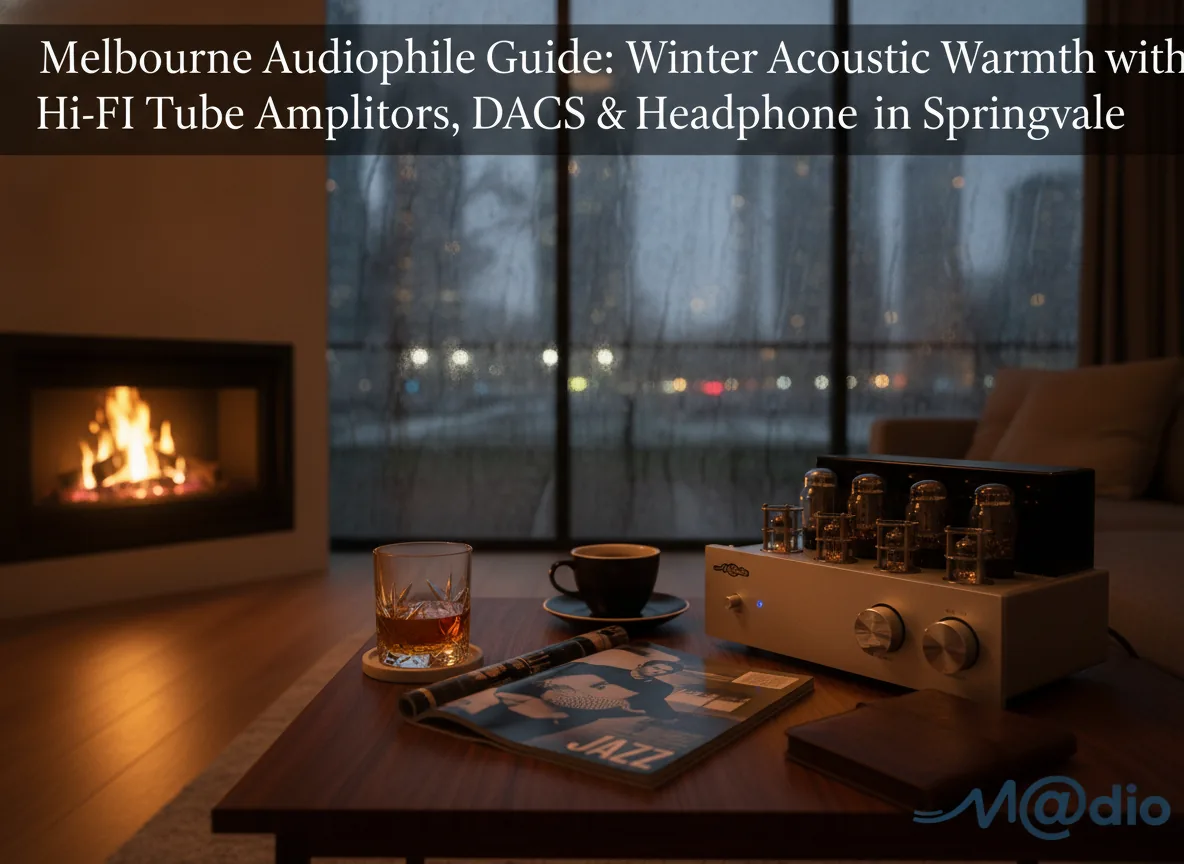
As June ushers in the proper onset of Melbourne’s cold, rainy winter, music lovers are naturally driven indoors. The dreary weather outside creates the perfect excuse to cocoon in a comfortable chair for extended, uninterrupted listening sessions. While modern digital systems offer clinical perfection, securing true acoustic refuge from the cold requires a different approach: the rich, harmonic magic of a high-end tube amplifier paired with a pristine DAC and premium dynamic headphones.
The Organic Magic of Harmonic Distortion
There is a profound difference between hearing a track and feeling it. Solid-state amplifiers are engineered to measure perfectly on a test bench, but they can occasionally render lossless acoustic, jazz, or classical tracks slightly sterile. Tube amplifiers, by contrast, naturally introduce even-order harmonic distortion. To the human ear, this specific type of distortion is perceived as immensely musical and organic. It wraps the listener in an immersive “warmth,” expanding the soundstage to create a holographic, intimately live performance right in your living room.
The Subjective Art of Tube Rolling
The allure of analog audio lies in its deep customizability, primarily through “tube rolling”—the practice of swapping vacuum tubes to slightly alter the amplifier’s sound profile. However, this process perfectly illustrates why high-fidelity audio is intensely subjective. A specific tube combination that one listener praises on an online forum as delivering “lush, enveloping warmth” might be dismissed by another as “muddy” or suffering from a “loss of micro-detail.” Your unique ear anatomy and personal acoustic preferences dictate this perception entirely.
Impedance Synergy: Why Specs Matter
To fully experience this analog warmth, electrical synergy is non-negotiable. Output Transformer Less (OTL) tube amplifiers inherently possess a high output impedance. If you mistakenly pair them with low-impedance headphones based on online hype, you will ruin the electrical damping factor, resulting in sluggish, bloated bass that completely smears the track. OTL amplifiers demand high-impedance dynamic headphones to truly sing.
Tube Amp & Headphone Synergy Calculator
Because these sonic flavors are so deeply personal, relying on specification sheets or forum hype is fundamentally flawed. Personal taste cannot be quantified by another reviewer’s ears. Engaging with dedicated online audio communities to cross-reference experiences remains the definitive way to discover the sound signature that perfectly resonates with you.
Frequently Asked Questions
What makes tube amplifiers sound “warm”?
Tube amplifiers utilize glass vacuum tubes to amplify the audio signal, naturally introducing even-order harmonic distortion. The human ear processes these even harmonics as a richer, thicker, and “warmer” sound, contrasting sharply with the harsh odd-order distortion found in overdriven solid-state equipment.
Why shouldn’t I trust online reviews for tube amplifiers?
Audio is deeply subjective. A reviewer’s perception of “warmth” or “detail” is dictated by their unique hearing profile, their specific headphones, and their musical preferences. What sounds “lush” to them might sound lacking in detail to you, making engaging with audiophile communities to cross-reference experiences essential.
Why do OTL tube amps need high-impedance headphones?
OTL (Output Transformer Less) tube amplifiers naturally have a high output impedance. To maintain proper electrical control over the headphone driver (damping factor) and prevent bloated bass, they must be paired with headphones featuring an even higher impedance, typically 150 Ohms or above.