
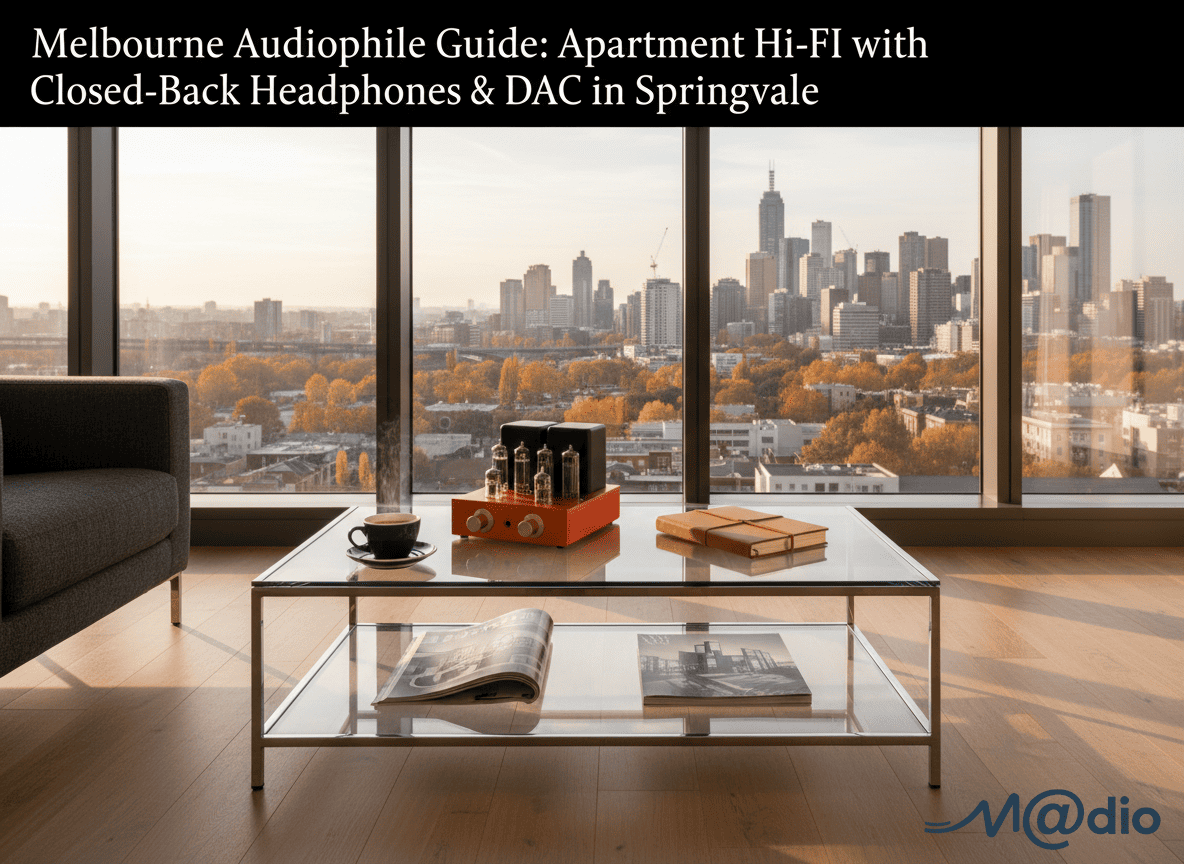
Melbourne’s shift toward high-density CBD apartment living poses a challenge: achieving high-fidelity sound without disturbing neighbors. For quiet autumn weekends, flagship closed-back headphones paired with a dedicated DAC/Amp combo offer massive soundstages while maintaining absolute privacy.
The Anatomy of Closed-Back Bass
Proper bass response in closed-back headphones relies entirely on acoustic sealing and clamping force. Because every listener’s ear and jaw anatomy differs, the physical seal varies drastically. Consequently, fit and comfort are completely subjective. Online reviews cannot verify if a headphone will seal correctly on your head—making blind purchases highly risky.
Subjective Sound and Blind Buying Risks
Acoustic preference is deeply personal. One reviewer’s “transparent soundstage” is another listener’s “harsh sibilance.” Dropping thousands on high-end audio gear without carefully evaluating component synergy is a massive financial gamble, often leading to disappointment when the sound signature doesn’t match your acoustic preferences.
System Synergy: Beyond the Specs
The intricate relationship between amplifier output impedance and headphone sensitivity dictates tonal balance. Mismatched desktop specifications often lead to harsh treble or bloated bass. Reading online spec sheets cannot replace the careful component matching required to avoid listening fatigue.
Headphone Impedance Matching Calculator
Frequently Asked Questions
Why are closed-back headphones best for apartments?
They isolate sound, preventing audio from leaking out to neighbors while blocking ambient city noise from interrupting your listening session.
Why is head shape important for audio quality?
Closed-back models require a perfect seal around the ears to deliver accurate bass. Variations in facial structure can break this seal, altering the sound signature.
Can I just buy a highly-reviewed DAC/Amp combo online?
Reviews are subjective. Electrical synergy and personal tonal preference require careful research and thoughtful pairing to ensure the setup doesn’t cause listening fatigue.
Map the apartment's listening situations before choosing equipment
Apartment listening is not one uniform problem. You may want privacy while someone sleeps, clearer speech for a call or music while cooking. Closed-back headphones can be a useful option, but they do not guarantee absolute privacy or remove every household sound. Start with a short map of when and where you actually listen.
- List three ordinary situations and the people affected. For each, write whether sound escaping, noise entering, wearing comfort or access to conversation matters most. This makes a broad wish for 'better isolation' specific enough to investigate.
- Choose the main listening chair and use the existing setup at the ordinary level. Ask a housemate to listen from their normal position. Agree on the result together; this courtesy check is not a laboratory attenuation measurement.
- For a work call, test microphone selection and the incoming level separately from music. Confirm that you can pause quickly for a visitor or conversation without unplugging the whole system.
- Check a comfortable fit with your normal glasses and posture. Note any pressure point and whether the cups shift as you move. Do not keep tightening to pursue a supposedly perfect seal.
Give every box in the chain a named job
A compact setup need not contain a separate converter, amplifier and several adapters. Draw the path from the music application to the headphone. Identify where conversion already happens, where volume is controlled and which device actually provides the headphone output. If an extra component has no necessary job, it can remain an option rather than a requirement.
Before adding a device, name the unresolved need in one sentence. Examples include an unavailable connection, an awkward control or a repeatable output problem at ordinary settings. Check the exact computer and headphone documentation, then ask a manufacturer about anything missing. A resistance-only calculator cannot provide a complete verdict, and a higher price cannot fill a specification gap.
A quiet-evening checklist
Save the working output selection, put controls within reach and check that notifications do not unexpectedly switch to speakers. Keep the listening queue short enough to stop naturally, with a quiet pause before continuing. If background noise makes you repeatedly turn up, reconsider the location or timing instead of treating volume as the solution.
Apartment planning questions
Do I need to buy a DAC to begin?
No. Start by checking what the existing system does and what is actually missing.
Does no audible leakage mean my level is safe?
No. The sound heard by a housemate does not establish your personal exposure.
What should I save after the trial?
Keep the connection sketch, comfortable fit setting, agreed household arrangement and open questions. Those notes are more useful than a generic promise of perfect synergy.
Background: listening exposure in everyday surroundings and an example of documented built-in conversion.