
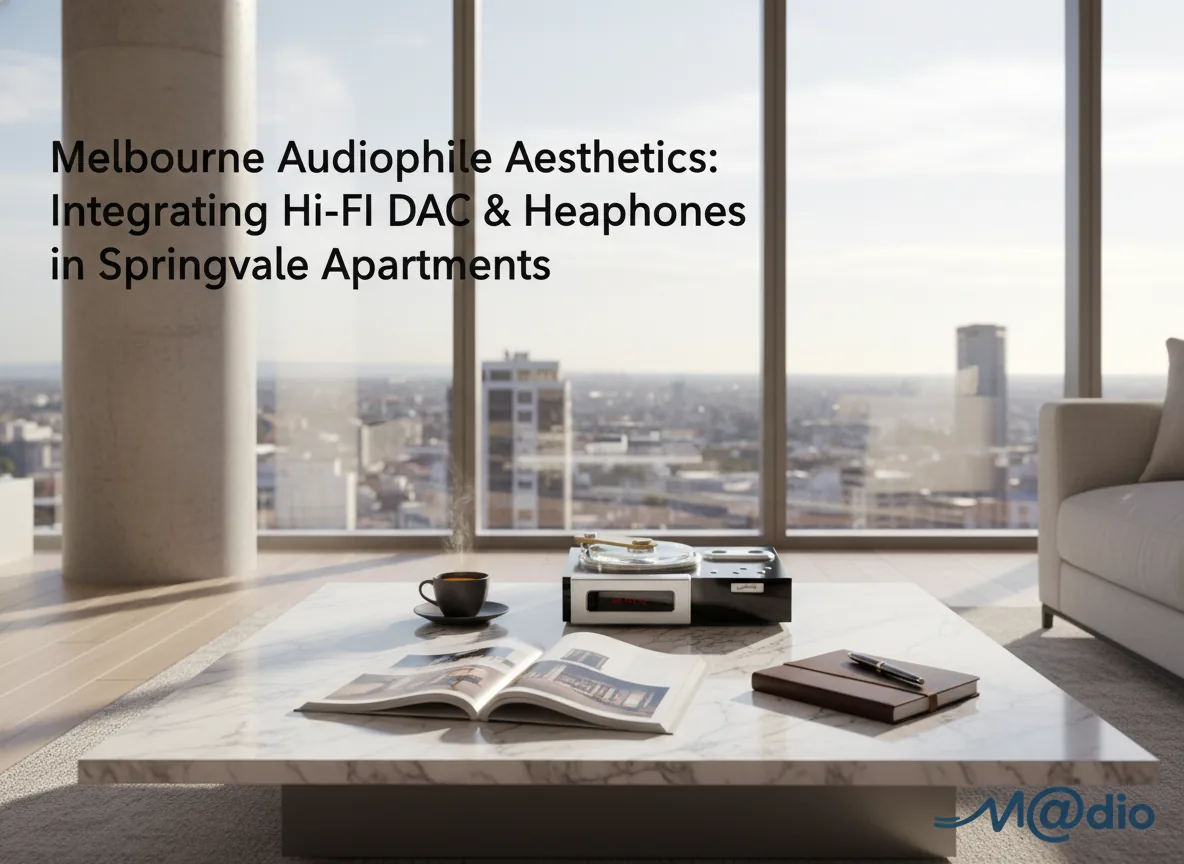
As Melbourne Design Week unfolds this May, the architectural spotlight returns to the city’s sleek, high-density apartment living. While floor-to-ceiling glass and polished concrete floors create stunning minimalist aesthetics, they present a nightmare for traditional floor-standing speakers. For the dedicated audiophile, integrating high-fidelity audio into these highly reflective spaces requires an elegant pivot towards visually striking, flagship closed-back headphones and dedicated desktop amplification.
The Acoustic Challenge of Modern Minimalism
Hard surfaces bounce sound waves uncontrollably, creating muddy bass and harsh treble reflections that ruin the acoustic image of a room. Rather than cluttering a minimalist CBD apartment with bulky acoustic panels, a dedicated Hi-Fi DAC and tube amplifier stack serves as both an acoustic solution and a sculptural centerpiece. Paired with closed-back headphones, this setup delivers a massive, neighbor-friendly soundstage without interacting with the room’s poor acoustics.
The Subjectivity of Acoustic Sealing
While closed-back headphones solve the problem of environmental acoustics, they introduce a new variable: facial anatomy. Proper bass response and sub-bass extension rely entirely on a perfect acoustic seal around the ear. Because every listener’s jawline and clamping force tolerance is unique, a headphone that a reviewer praises for “punchy bass” might sound completely hollow to another user. Reading online reviews cannot replicate the physical reality of how a headphone seals against your own head.
Synergy and Impedance: Beyond the Spec Sheet
The visual appeal of a glowing tube amplifier is undeniable, but its electrical synergy with your chosen headphones is what dictates the final sound. A common trap is pairing a high-impedance Output Transformer Less (OTL) tube amplifier with highly sensitive, low-impedance headphones. This mismatch destroys electrical damping, resulting in a bloated, uncontrolled sound. Finding true acoustic aesthetics means aligning both the visual design and the electrical specifications.
Headphone Impedance Matching Calculator
A true high-fidelity experience in a modern minimalist space is a delicate balance of physical fit, electrical synergy, and aesthetic beauty. Attempting to blindly piece together this delicate equation based on internet hype alone is a massive financial gamble. The intersection of design and sound must be carefully researched and thoughtfully matched to ensure long-term listening fatigue is kept at bay.
Frequently Asked Questions
Why do floor-standing speakers struggle in modern apartments?
Modern apartments often feature highly reflective surfaces like glass, concrete, and hardwood. These materials cause sound waves to bounce erratically, creating standing waves and echoes that smear the audio clarity of traditional floor-standing speakers.
What makes closed-back headphones ideal for high-density living?
Closed-back headphones isolate the acoustic chamber, preventing your music from leaking out to disturb neighbors or roommates, while simultaneously blocking out external city and building noise. This ensures a pristine, private listening environment.
Why is careful synergy matching essential when buying a tube amplifier and headphones?
Both physical comfort factors (clamping force, acoustic seal) and electrical synergy (impedance matching between the amp and headphones) are highly variable. Relying solely on basic spec sheets is often insufficient; thoroughly researching component pairing and understanding acoustic principles helps guarantee the setup sounds correct for your specific needs.