
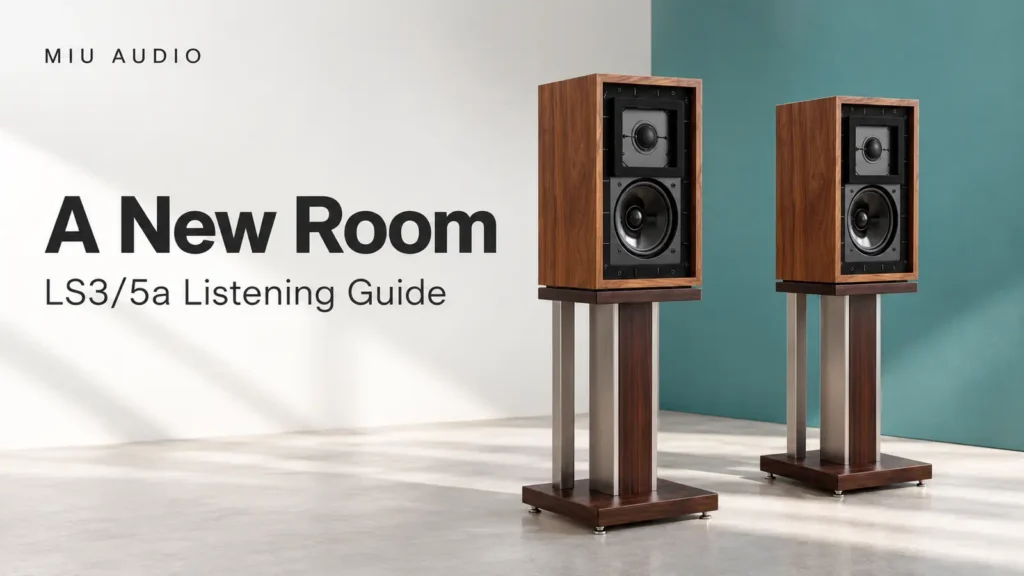
After moving home, treat your LS3/5a setup as a new listening system, even if every component is unchanged. Reconnect using the relevant equipment instructions, establish one comfortable seat and one familiar recording, then document the room before making comparisons. The aim is not to reproduce a photograph of the old setup. It is to find a repeatable starting point in the new space without confusing a changed room with a changed loudspeaker.
Keep the old information, not the old assumptions
Before dismantling a system, photograph the visible connections and make a simple list of equipment and cable destinations. Keep serial numbers and private account details out of anything you share publicly. If you have already moved, start with the equipment manuals rather than reconstructing connections from memory. Do not assume that a connector with a familiar shape serves the same purpose on every component.
Save a separate note describing the old room: seating position, nearby furniture and which recording you used most often. That note can help explain your expectations, but it is not a target measurement. A different room can make the old distances impractical. Recreating them without considering doorways, stability and normal household use is not a useful first step.
Establish a safe, ordinary room layout
Set up the room for living before setting it up for comparison. Leave access to doors and switches, keep cable routes out of walkways, and use stable supports appropriate to the loudspeakers. Follow the equipment instructions for connections and amplifier matching. This guide does not specify an amplifier output, terminal arrangement or a universal distance for this model.
Use a small sketch to identify the pair, the main seat and nearby surfaces. Mark measurements from a consistent point on each cabinet so that a later note is meaningful. Genelec's general positioning guidance discusses the relationship between the listening position and the room; it is background context, not a model-specific installation prescription for LS3/5a.
Listen before unpacking every possible upgrade
Choose one recording you already know, note its exact edition and use the same playback settings for each pass. Begin at a comfortable level. Listen once without taking notes, then replay a short passage and write down what caught your attention. Describe the observation rather than naming a cause: 'voice appears left of centre' is more useful than 'the new room is bad'.
Next, distinguish faults from preferences. A missing channel, intermittent sound or a connection that cannot be identified needs a connection check with the system safely powered down according to its instructions. A sound you simply like less is a different issue. Do not respond to either by increasing the volume or swapping several parts at once.
Make the first change reversible
Pick one practical variable, such as returning a movable chair to a recorded position. Keep the source, recording and settings unchanged. Listen again, then restore the baseline. If the apparent improvement disappears when you repeat the sequence, leave the question open rather than treating the first impression as proof.
A useful relocation record contains the date, a room sketch, the reference recording, the baseline layout and one tested change. Add a short statement about what remains uncertain. This becomes a reliable starting point for a later conversation with Miu Audio, instead of a list of upgrades purchased before the new room was understood.
A first-week checklist
- Confirm the exact connection path using the relevant manuals.
- Keep one seat and one recording consistent during checks.
- Photograph only the layout and non-sensitive connections.
- Record one change at a time and keep a way to restore it.
- Separate a connection fault from a personal listening preference.
For the model overview, learn more about LS3/5a. Our listening guides cover related topics. Use the Miu Audio contact page for questions about your proposed setup; availability and any purchase arrangements require current confirmation.
Frequently asked questions
Should I copy the speaker distances from my previous home?
Keep those measurements as a reference, not a rule. Start with a safe layout that suits the new room, then make small, documented comparisons rather than assuming the old arrangement must be best.
Does a different sound mean the speakers were damaged during the move?
Not necessarily. A changed room, connection or source setting can complicate the comparison. If you suspect damage or a fault, stop using the affected equipment and ask for qualified advice rather than opening it.
Should I buy room treatment immediately?
First establish a stable baseline and identify the specific issue you want to address. This exercise does not prescribe treatment or promise that a purchase will solve an observation made in a new room.
What should I send when asking for setup advice?
A simple room sketch, visible connection route, reference recording and a clear description of the issue are useful. Do not send passwords, streaming logins or other private account information.
Sources and scope
Miu Audio Featured Products identifies the model. Genelec Monitor Placement provides general room-positioning context. The relocation checklist above is editorial guidance, not a measurement or listening test of this product.