
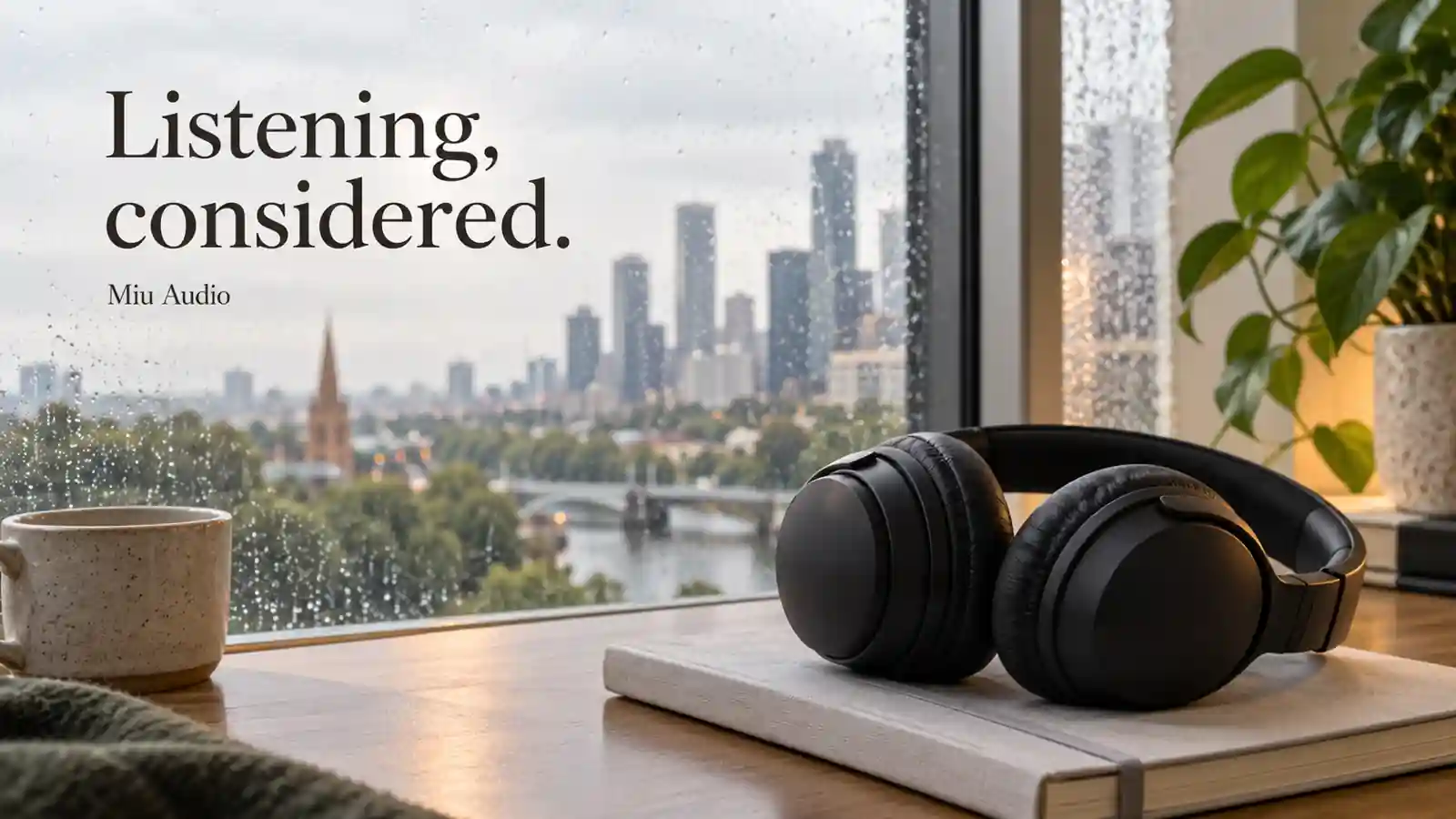
As freezing June temperatures force Melburnians to completely seal their apartment windows, the acoustic dynamics of high-density CBD living shift dramatically. Shared walls and closed environments exponentially heighten noise sensitivity among neighbors, turning traditional audio setups into potential liabilities. For the discerning urban audiophile, true sanctuary is found by moving away from room-dominating floor-standing speakers and embracing flagship closed-back headphones paired with premium Digital Audio Players (DAPs).
The Acoustic Limitations of Modern Apartments
Modern high-rise apartments are architectural marvels, often dominated by floor-to-ceiling glass, polished concrete, and hardwood floors. While visually stunning, these highly reflective surfaces are an acoustic nightmare for traditional speakers. Sound waves bounce erratically, creating standing waves that smear midrange details and produce a booming, muddy bass that easily penetrates adjoining walls. Transitioning to a dedicated high-end closed-back headphone setup bypasses room acoustics entirely, delivering a sprawling, three-dimensional soundstage without disturbing those around you.
The Physics of Acoustic Sealing
While closed-back headphones offer the perfect neighbor-friendly solution, their high-fidelity performance is incredibly fragile. Unlike open-back designs, closed-back headphones rely completely on the physics of a flawless, airtight acoustic seal. To accurately reproduce sub-bass and provide total passive noise isolation, the headphone must effectively pressurize the air between the driver and your eardrum. This seal is entirely dependent on three factors: the headphone’s structural clamping force, the density of its ear pad materials, and your unique cranial anatomy.
Why YouTube Reviews Fail to Predict Your Fit
Because physical anatomy dictates acoustic delivery, luxury audio gear cannot be safely evaluated through YouTube reviews alone. A respected online critic might praise a closed-back headphone for its “visceral, punchy low-end” because the ear pads perfectly contour to their specific jawline. However, if you have a different facial structure, or simply wear thick-framed reading glasses, that exact same headphone will fail to seal. The resulting sound signature will be thin, hollow, and completely devoid of bass impact. Furthermore, electrical synergy between your headphones and your chosen DAC or amplifier must be strictly calculated.
Headphone Impedance Matching Calculator
True high-fidelity is the intersection of exact electrical synergy and personalized physical comfort. Validating clamping force, ear pad contact, and tonal balance through engaging with dedicated audio communities to cross-reference peer experiences is the only logical way to ensure your apartment audio sanctuary performs flawlessly.
Frequently Asked Questions
Why do floor-standing speakers struggle in modern apartments?
Modern apartments feature hard, reflective surfaces like glass and concrete. These materials cause acoustic reflections that overlap and cancel each other out, severely smearing audio clarity and causing muddy bass that vibrates through shared walls.
How do glasses affect closed-back headphone bass?
Closed-back headphones require an airtight seal around the ear to pressurize the air and deliver deep bass. The arms of your glasses can lift the ear pads slightly, compromising this seal and leading to a massive loss in low-frequency response.
What is a DAP, and why is it ideal for apartment living?
A Digital Audio Player (DAP) is a premium, portable device engineered solely for high-resolution music playback. It houses high-end DAC chips and powerful amplification, allowing you to move freely around your apartment while enjoying desktop-tier audio quality away from your desk.
Compare headphone and speaker presentation without forcing a winner
If both listening options are already available, give each a different job in your notebook. Headphones can be used for an individual listening session; a correctly set up compact speaker pair can be assessed from a chosen seat. Neither needs to be described as a perfect imitation of the other.
- Select a familiar stereo recording with a centred voice and instruments to either side. Keep its version and any optional processing fixed.
- On headphones, note the apparent position of the voice, the spread of the instruments and what happens when you refit the cups normally.
- On speakers, use a modest level and your recorded listening position. Note the centre image, then move your head slightly to understand how dependent the impression is on that seat.
- Write separate observations about presentation and household practicality. A wider impression does not answer whether the arrangement is convenient at a particular time of day.
The EBU listening-conditions guidance distinguishes headphone listening from loudspeaker listening in a room. Use that distinction to organise the comparison, not to promise that one format always delivers a larger or more accurate image.
Presentation FAQ
Should the voice seem to occupy exactly the same space?
Record what you hear without requiring an identical spatial impression. The playback arrangements are different.
Does an enjoyable speaker result overrule shared-home constraints?
No. Keep listening preference separate from agreed times, levels and other people's use of the room. An informal comparison cannot establish that sound will remain inside the flat or that any headphone will be inaudible to others.