
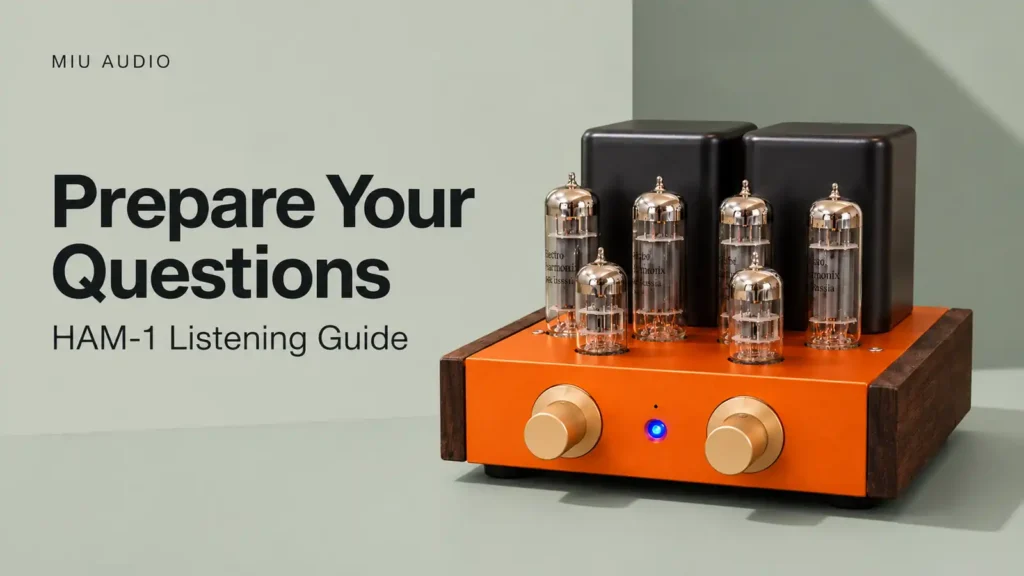
For a useful HAM-1 demonstration, ask for the complete playback chain to be identified before listening. Bring a familiar recording, a description of your intended use and specific compatibility questions. A demonstration can help you understand a confirmed arrangement, but it does not prove that every component at home will work with it or replace current installation and operating instructions.
State the decision you are trying to make
Write down whether the main question is physical fit, source connection, system compatibility or a listening preference. A vague request to hear something better makes it hard to know whether the demonstration answered your actual need. Keep the question small enough that the person assisting can explain the relevant arrangement.
Describe the intended room and everyday use without sharing private account information. If the proposed location is a desk, a simple sketch is useful. If you already own equipment, provide model identities and the outputs or inputs you hope to use. Do not assume that a familiar connector makes the combination compatible.
Ask for the chain to be named
Before playback, identify the source device, selected output, HAM-1 input and the rest of the demonstrated arrangement. Ask which operating mode is in use and which instructions apply. The HAM-1 product overview supplies introductory context, not a complete compatibility approval for your proposed home system.
Request that any difference from your intended arrangement be made explicit. A successful demonstration with one source does not certify another source that has not been checked. Keep 'demonstrated', 'confirmed for my setup' and 'still unknown' as separate categories in the note you take away.
Bring music, not an account handover
Choose a familiar recording and note its exact edition and a passage you want to hear. Use an available, appropriate playback method agreed for the demonstration. Do not hand over streaming passwords or ask someone to log into your private account to make the session convenient.
Record relevant source settings. Spotify explains volume normalisation as balancing song levels; if that service is used, note its state rather than assuming a particular setting is required. A change in recording or processing can complicate an equipment comparison, so keep the musical source identifiable throughout.
Ask about the owner routine
Leave time for practical questions: safe placement, required clearances, connection procedure, normal start and stop routine, and when support is needed. Ask for the current instructions rather than relying on an improvised explanation from a product photograph. This article provides no internal servicing, tube replacement or electrical modification procedure.
If the answer to a compatibility or safety question remains uncertain, write it down and leave it unresolved. Do not use a pleasant listening impression to override a missing instruction. Understanding the limitations of the demonstration is part of a useful decision, not a reason to rush into another configuration.
Separate preference from proof
After listening, describe what you enjoyed and the specific passage involved. Keep the statement personal and tied to the confirmed chain. Do not claim that a short session establishes measured accuracy, guaranteed system synergy or a universal improvement over equipment that was not compared under controlled conditions.
Take away a concise note with the chain, recording, relevant settings, answered questions and open questions. Confirm current availability and any purchase arrangements separately. Read more Miu Audio preparation guides or contact Miu Audio to discuss a proposed demonstration; this article does not promise that a booking or particular stock is available.
Frequently asked questions
What is the most useful information to bring?
A clear use case, intended room or desk arrangement, existing model identities and a familiar recording are useful. Keep account credentials, payment details and private network information out of the brief.
Does a demonstration confirm compatibility with my own equipment?
Only the specific arrangement and claims explicitly confirmed can be treated as confirmed. Record differences from your intended setup and ask about them rather than assuming all alternatives are equivalent.
Should I judge HAM-1 using a single dramatic track?
A familiar passage can focus a question, but one dramatic moment is not a universal performance test. Keep the source identifiable and relate the observation to the decision you actually need to make.
What should remain in the handover note?
The demonstrated chain, relevant instructions, recording edition, answered compatibility questions and unresolved items should remain distinct. A preference should not be written as a technical approval.
Sources and scope
Miu Audio Featured Products provides model context. Spotify Volume Normalization explains a named source feature. The demonstration checklist is original editorial preparation, not a tested product review or confirmed booking.