
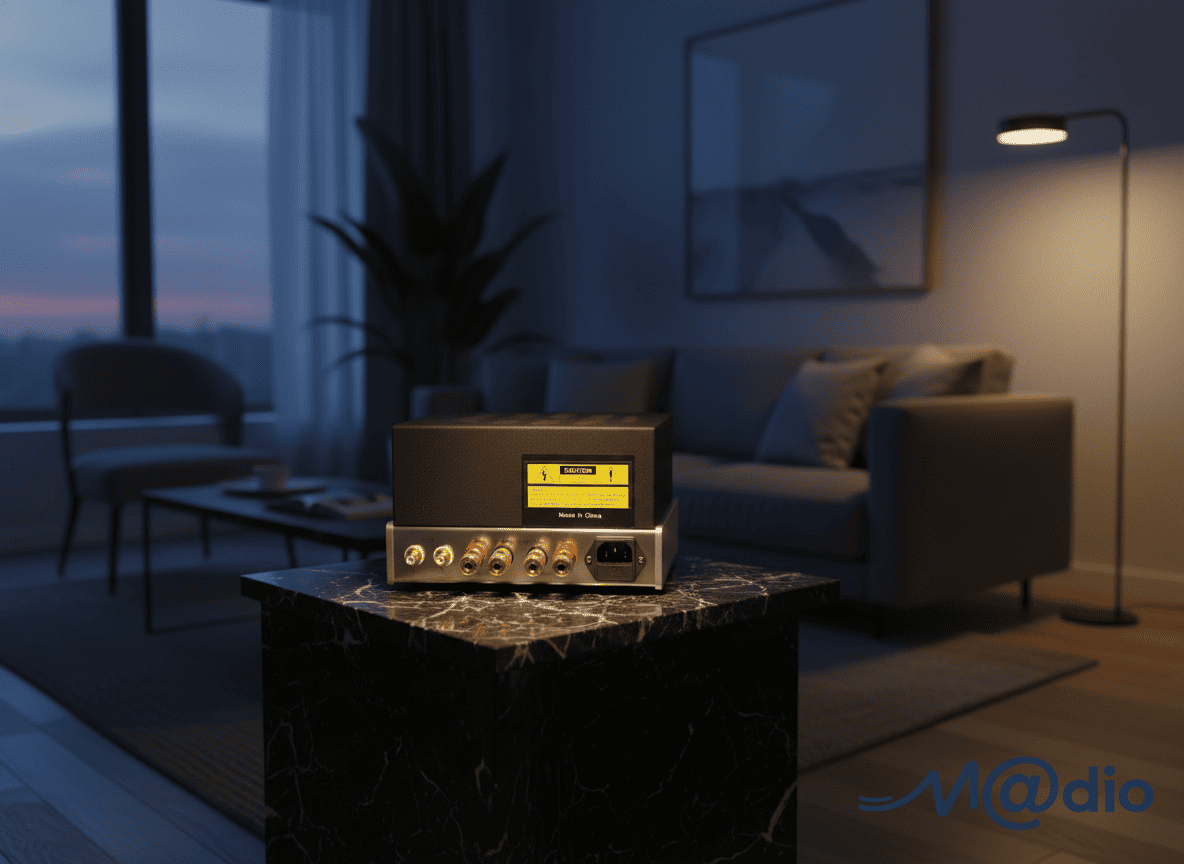
As we move late into April, Melbourne’s overnight temperatures are steadily dropping toward a crisp 12°C. The transition into the heart of autumn is the ideal season to stay indoors, pour a glass of your favorite spirit, and build a warm, inviting personal listening sanctuary. Nothing anchors that sanctuary quite like the mesmerizing amber glow and lush, immersive sound signature of a high-end vacuum tube amplifier.
The Acoustic Romance of Vacuum Tubes
While solid-state amplifiers are praised for their clinical precision, tube amplifiers excel in emotional resonance. They naturally introduce pleasant even-order harmonic distortion, creating a sound that the human ear perceives as organic, expansive, and incredibly “warm.” When paired properly with high-impedance headphones, acoustic guitars gain lifelike weight, and vocal tracks hover in a holographic, three-dimensional soundstage. It is a deeply musical experience that perfectly counteracts a cold, dark Melbourne night.
The Hidden Traps of the “Blind Buy”
However, entering the world of tube audio via the internet is fraught with risk. The concept of acoustic “warmth” is entirely subjective and system-dependent. Reading a glowing review online cannot guarantee how an amplifier will synergize with your specific headphones. Furthermore, tube amplifiers require careful impedance matching; pairing a pure OTL (Output Transformerless) tube amp with low-impedance headphones will result in a bloated, muddy mess.
Additionally, vacuum tubes are fragile. Importing heavy, glass-filled amplifiers from grey-market overseas retailers leaves you vulnerable. If a tube shatters in transit or bias circuits fail, the lack of local Australian warranty support turns a dream purchase into a costly nightmare.
Interactive: Headphone Impedance Matching Calculator
Not all headphones pair perfectly with every tube amplifier. Enter your headphone’s impedance below to discover the ideal amplifier architecture to unlock their true potential.
The Key to Audio Synergy
Audio synergy is a delicate balance. To truly appreciate the nuances of “tube rolling”—the art of swapping vacuum tubes to slightly alter the sound profile—the foundational pairing between your amplifier and headphones must be technically sound. Carefully matching components based on your specific equipment is essential to unlocking the true potential of your setup.
Building your ideal home listening sanctuary means making informed, reliable choices. By ensuring your tube amplifier perfectly matches your headphones’ impedance, and securing your system with robust local Australian warranty support, you can fully immerse yourself in the warm, rich soundstage that only high-quality vacuum tubes can provide.
Frequently Asked Questions
What exactly is “tube rolling”?
Tube rolling is the practice of replacing the vacuum tubes in your amplifier with different brands, materials, or vintage models to fine-tune the sound signature. Different tubes can add more bass impact, widen the soundstage, or sweeten the vocal range, allowing you to customize your setup to your exact preferences.
Why do tube amplifiers pair best with high-impedance headphones?
Pure OTL (Output Transformerless) tube amplifiers naturally output a higher impedance. When paired with high-impedance dynamic headphones (like 300-ohm Sennheisers), the power transfer is highly efficient, resulting in spectacular clarity and control. Pairing them with low-impedance headphones can cause distortion and a loss of bass tightness.
Why should I avoid grey-market imports for tube amplifiers?
Tube amplifiers are heavy, use high-voltage internal circuitry, and rely on fragile glass tubes. Shipping them from unauthorized overseas retailers significantly increases the risk of damage. Purchasing locally at Miu Audio ensures you are protected by Australian consumer law, with expert repair services and replacement tubes readily available.
Read a matching specification as more than an ohm number
A valve amplifier's suitability cannot be reduced to a minimum headphone impedance. Resistance, sensitivity and the amplifier's documented output capability answer different questions. The claim that a high-impedance pairing is always ideal should therefore be treated as a prompt to investigate, not a buying rule.
- Find the headphone's exact model and sensitivity specification, including whether it is stated per volt or per milliwatt. Keep the unit attached to the number; the two forms cannot be compared as though they were identical.
- Ask for the amplifier's supported loads and output specification under stated conditions. If an output-impedance figure is available, record it separately from the headphone's nominal impedance.
- Check the intended source and output sockets in the manuals. A shared connector shape does not establish the signal role, and a topology label does not replace instructions.
- Prepare a quiet, familiar reference passage for the eventual listening trial. Begin with the documented configuration and ordinary level, not an attempt to explore maximum loudness.
- If a needed specification is missing, leave the compatibility question unresolved and ask the manufacturer. Do not fill the gap with an internet threshold or assume that more expensive equipment solves it.
Matching questions
Does a higher impedance always mean harder to drive?
Not on its own. Sensitivity and the available voltage/current also matter.
Does a valve topology guarantee warmth or clarity?
No. Keep those as observations about a particular listening trial, not assured category benefits.
Engineering context: load-dependent headphone amplifier requirements.