
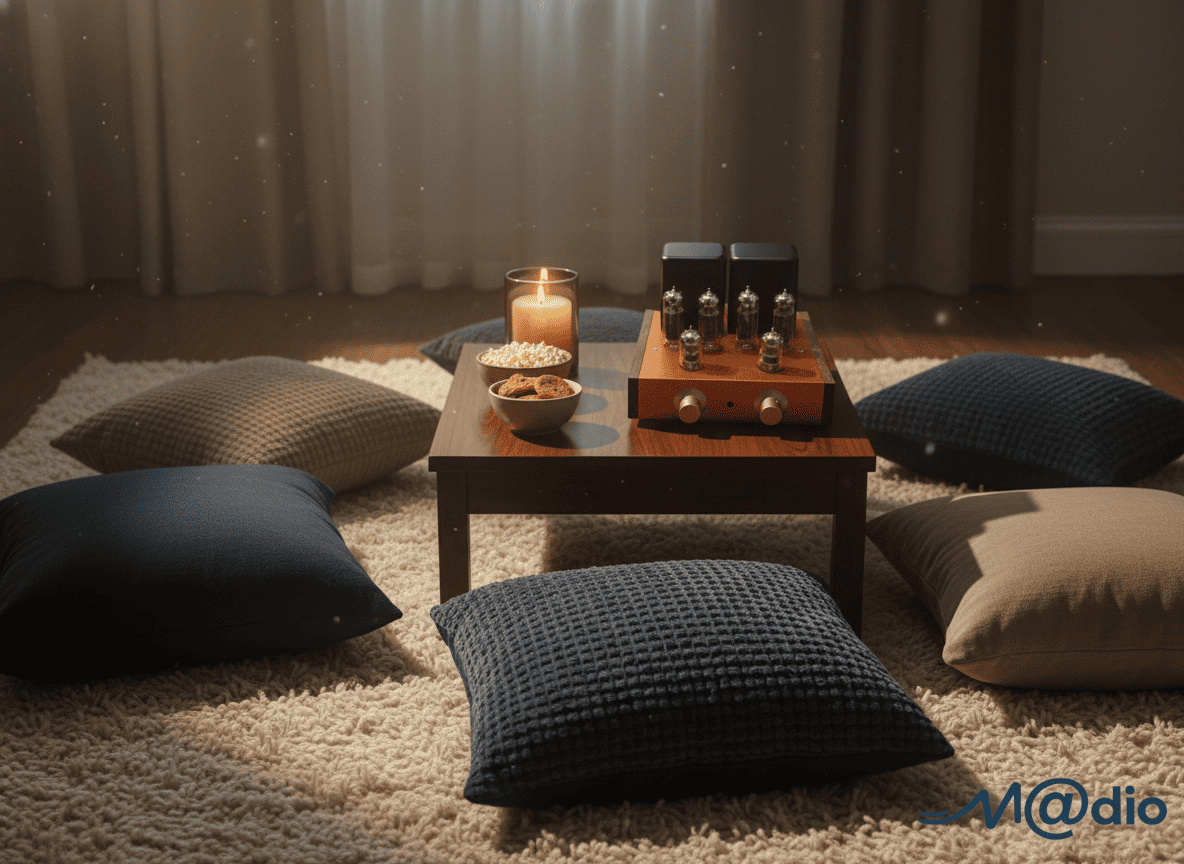
As Daylight Saving Time draws to a close this April alongside Easter Sunday, Victoria is rapidly trading long summer evenings for earlier sunsets and a distinct chill in the air. For the Melbourne audiophile, these cooler autumn nights herald the arrival of the ultimate indoor sanctuary season—the perfect time to power up a tube amplifier and let the music envelop you.
The Intimate Magic of Vacuum Tubes
There is a unique romance to vacuum tube amplification. Beyond their mesmerizing ambient glow in a dimly lit room, tube amplifiers introduce even-order harmonic distortion. While solid-state purists might chase perfect measurements, our ears often interpret these even harmonics as a “lush,” “warm,” and deeply musical sound signature. It is an organic presentation that breathes life into vocals and acoustic instruments, transforming a standard Melbourne apartment into an intimate live jazz club.
Why Blind-Buying Tube Gear is a Risky Gamble
However, tube warmth is incredibly subjective and highly system-dependent. Purchasing a tube amplifier based on internet hype is fraught with risk. Tube amps operate on complex synergy—specifically regarding your speakers’ sensitivity and impedance curve. A pairing that sounds heavenly on a forum review might sound sluggish or muddy in your specific setup. Furthermore, vacuum tubes are delicate glass components; importing grey-market units leaves you completely exposed without local warranty support when a tube inevitably needs replacing or re-biasing.
Interactive: Room Size vs. Tube Synergy Estimator
Living in a compact CBD apartment or a spacious suburban home? Enter your listening room dimensions to discover the optimal tube amplifier approach for your space.
The Value of Physical Verification
True audio synergy cannot be read; it must be felt. Because vacuum tube characteristics interact uniquely with specific speaker impedance curves, relying solely on internet reviews can lead to mismatched pairings and expensive disappointment.
Building an immersive listening environment means prioritizing real-world synergy over spec sheets. By taking the time to physically verify the equipment firsthand and securing your fragile vacuum tubes with reliable local Australian warranty peace of mind, you ensure a deeply satisfying, perfectly synergized system that will serve your musical journey for years to come.
Frequently Asked Questions
Do tube amplifiers consume a lot of electricity and run hot?
Yes, by design, vacuum tubes operate at high temperatures to release electrons, acting as small localized heaters. This is precisely why they are so comforting during Melbourne’s cooler autumn and winter evenings, but they do require proper ventilation in your audio rack.
Can I pair a tube amplifier with any set of speakers?
Not necessarily. Traditional pure tube amplifiers often have lower wattage outputs compared to solid-state amps. They pair best with high-sensitivity speakers (typically 90dB and above). If you have low-sensitivity speakers, a tube-hybrid amplifier might provide the best of both worlds: tube warmth with solid-state power.
Why is a local warranty so important for tube equipment?
Tubes are consumable, fragile items with a finite lifespan. Shipping vibrations from overseas grey-market purchases can damage internal filaments. Buying locally ensures you have immediate access to replacement tubes, expert re-biasing services, and peace of mind protecting your investment.
Separate an evening atmosphere from an amplifier decision
The appeal of an evening ritual is real, but 'warm' describes a listener's impression, not a guaranteed property of every valve design. Do not use the glow, room temperature or a broad sensitivity threshold to predict a particular pairing. Start with the exact equipment documentation and a question you can actually check.
- List the source, amplifier and speakers or headphones. Identify which output is intended for the load you plan to connect; a product category name is not a connection instruction.
- Ask for the manufacturer's operating and ventilation requirements before choosing a shelf. Keep the proposed space accessible for normal controls and inspection, and do not treat amplifier heat as room heating.
- Choose one vocal recording and one fuller arrangement already familiar to you. Compare at similar levels without changing speakers, chair position or processing during the electronics comparison.
- Describe observations narrowly: for example, whether a vocal sounds more forward on a specified passage. Separate this preference note from faults such as an unexpected buzz, crackle or interruption.
- If support matters to the purchase, obtain the named service contact and written scope of cover for both amplifier and valves. A local address alone does not establish turnaround or replacement availability.
Evening setup questions
Does a room-size quiz identify the right valve amplifier?
No. It leaves out the actual load, listening distance, required level and the manufacturer's limitations.
Should I accept noise as part of the valve character?
Do not assume so. Record the circumstances, stop using equipment that appears faulty and seek guidance for the exact unit rather than attempting internal work.
Comparison background: assessment of audio differences.